Picture Book Snob

An independent guide to picture books

Picture books worth reading again and again

Curated lists by age, theme and season for parents, teachers and librarians, with a read-aloud tip for every book.

Choose by age 0–234–7
Browse the 12 guides

Picture Book Snob is an independent guide to children's picture books for parents, teachers and librarians in the US, the UK and Ireland. We sort books by age, theme and season, explain why each one works and who it suits, and add a tip for reading it aloud. Start with one of the lists below, or with four books we would hand to almost any family.

What makes a good picture book

A good picture book is a partnership. The words and pictures each carry part of the story, and the best books leave a gap between them for the child to fill: a fox the text never mentions, a hat the narrator swears he did not steal. It sounds good read aloud, because it will be read aloud, often dozens of times. It uses the page turn for surprise. And it still has something to offer on the twentieth reading, for the child and for the adult holding it.

Those are the tests we apply. Every book on this site has a named author and illustrator, a publisher and a first publication year, so you can find the edition you want in a shop or library.

Picture books by age

Babies and toddlers want rhythm, faces and something to touch. Lift-the-flap books such as Dear Zoo and bedtime classics such as Goodnight Moon are made for this stage.

At three, children start to join in. Refrains, chants and patterns they can predict are the heart of our list of books for 3-year-olds.

From four to six, jokes and twists take over. Children enjoy books where the pictures contradict the words, and stories that send up tales they already know, like the fairy tale picture books on our list.

From six to eight, picture books are still worth reading. Longer stories, poetry collections and wordless books that a child narrates all build confidence alongside early chapter books.
Four books to start with

Ages 1–5

The Very Hungry Caterpillar

Eric Carle · World Publishing Company, 1969

A caterpillar eats his way through a week of food, leaving holes in the pages, and turns into a butterfly. Eric Carle's painted-paper collage still looks fresh more than fifty years after it first appeared, and the holes make counting something a child can touch. For ages 1 to 5.

Ages 3–6

The Gruffalo

Julia Donaldson, illustrated by Axel Scheffler · Macmillan Children's Books, 1999

A clever mouse invents a monster to scare off the animals who want to eat him, then meets the real thing. The rhyme is easy to learn by heart, which is exactly what three-year-olds love to do. For ages 3 to 6, and the natural way into Julia Donaldson's books.

Ages 4–8

Here Be Dragons

Susannah Lloyd, illustrated by Paddy Donnelly · Frances Lincoln Children's Books, 2021

A pompous knight hunts for a dragon he never quite manages to spot, while young readers can see exactly where the danger is. It plays like a pantomime and is one of our favourite newer fairy-tale send-ups. For ages 4 to 8.

Ages 3–6

Our Big Day

Bob Johnston, illustrated by Michael Emberley · The O'Brien Press, 2022

A young girl has the job of ring-bearer when her Uncle David marries Simon. This Irish picture book from The O'Brien Press celebrates love, family and a wedding day seen through a child's eyes. For ages 3 to 6.

How we choose

We choose books on their merits: a story that holds up when read aloud, pictures that add something the words do not, and a clear sense of the child each book suits. New titles from small and independent publishers sit alongside long-loved classics, because good books come from both. Each list says who a book is for and how to share it, and we update the lists when a new book earns its place.

Writing one?

How to write a picture book

How to write a picture book: the 32-page format, word counts under 500, page turns, read-aloud rhythm, and how to revise and proofread your manuscript.

Read the craft guide
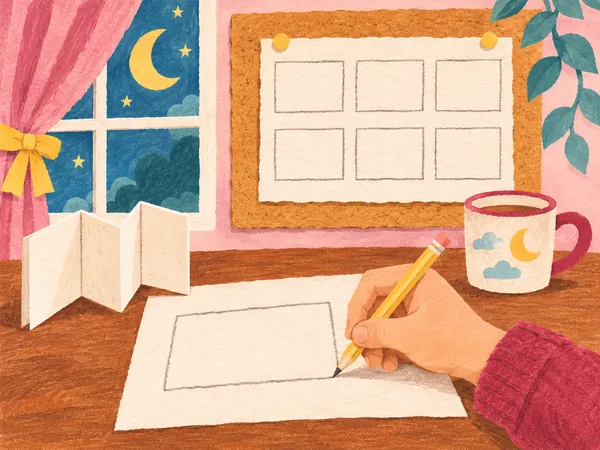
A writer’s desk with a storyboard of picture thumbnails, a pencil and a folded paper book dummy